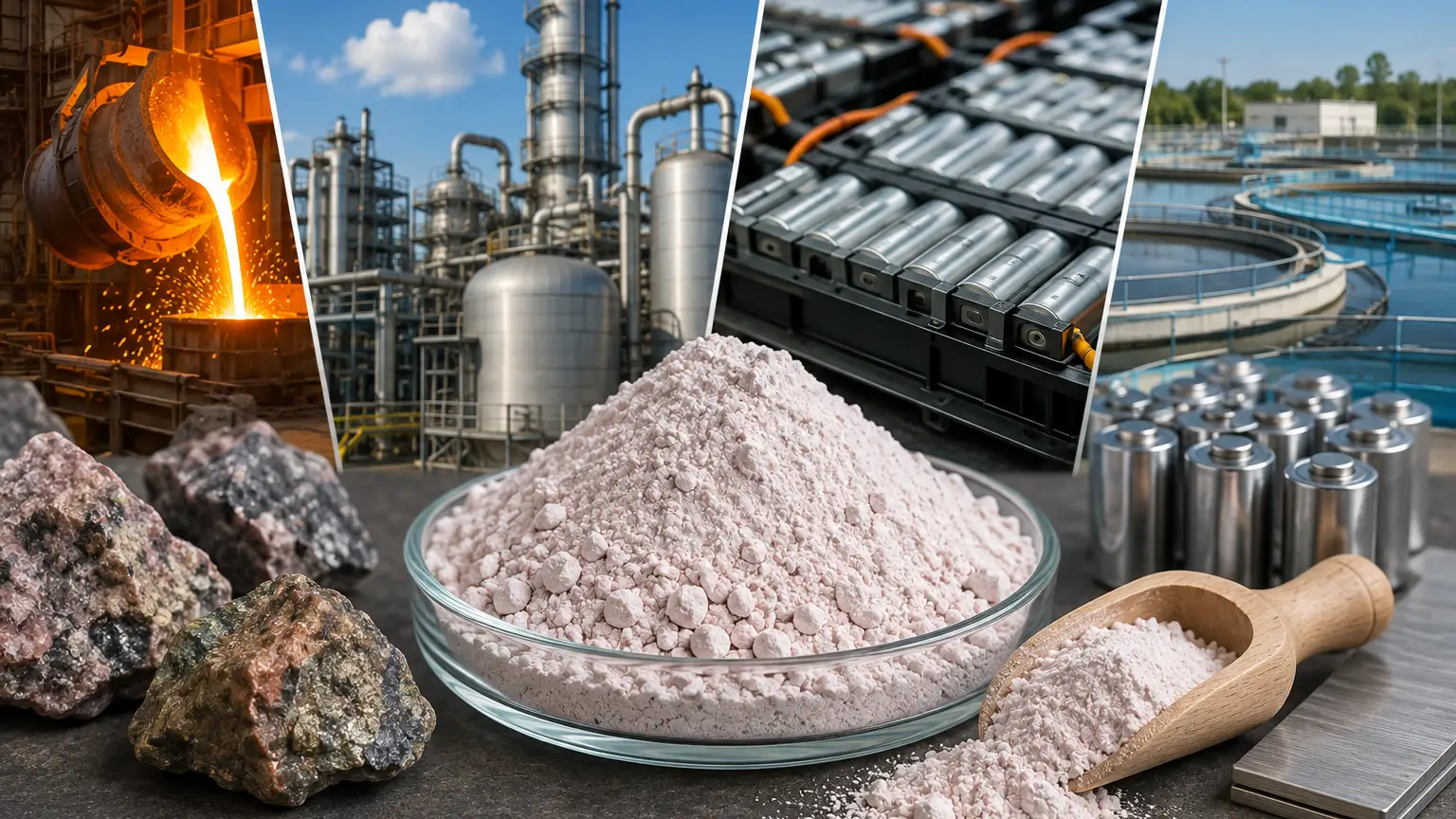

Introduction Borax Decahydrate
The global market for borax decahydrate is entering a pivotal phase as we move toward 2026. Used widely as a multifunctional water treatment chemical, buffering agent, flux, and ingredient in detergents and glass, borax decahydrate sits at the intersection of several critical industrial value chains. Its supply dynamics are shaped by concentrated mineral resources, evolving environmental regulations, and the ongoing reconfiguration of global logistics. For buyers, distributors, and downstream manufacturers, understanding the emerging supply chain landscape is essential for ensuring continuity of operations and cost competitiveness.
Over the last decade, borate minerals, including those used to produce borax decahydrate, have witnessed relatively steady demand growth, supported by sectors such as glass and fiberglass, ceramics, agriculture, and industrial cleaning. However, events such as the COVID-19 pandemic, logistics bottlenecks in major shipping lanes, and energy price volatility have highlighted structural vulnerabilities in chemical supply chains. As a result, procurement teams are reassessing sourcing strategies, inventory policies, and supplier diversification, often turning to global trading platforms like chemtradeasia for more resilient supply options.
Looking ahead to 2026, the supply chain of borax decahydrate is expected to be influenced by three main forces: the geographic concentration of borate reserves, tightening environmental and safety standards, and the push for higher-value, more sustainable applications. This article provides a detailed, globally oriented view of the borax decahydrate supply chain, market outlook, product characteristics, and applications, with specific emphasis on its role in water treatment and industrial processes, and how specialized distributors help bridge gaps between producers and end users.
Global Market Overview of Borax Decahydrate to 2026
Borax decahydrate, chemically known as sodium tetraborate decahydrate (Na2B4O7·10H2O), is part of the broader borates market. Industry analyses in recent years have estimated the global borates market size in the range of several billion US dollars, with compound annual growth rates (CAGR) typically between 3–5% depending on the segment and region. While exact figures vary by source, the overall trend points to stable, moderate growth rather than extreme cyclicality, driven primarily by glass, fiberglass, ceramics, and detergent applications, with incremental growth in agriculture and water treatment.
By 2026, demand for borax decahydrate is expected to be supported by infrastructure and construction activity (which drives glass and fiberglass consumption), as well as by increasing standards for industrial cleaning and water quality. Emerging economies in Asia-Pacific, Latin America, and parts of the Middle East are expected to remain growth engines, thanks to urbanization, industrial expansion, and investments in utilities. At the same time, mature markets in Europe and North America continue to demand high-quality, compliant products, particularly where borax decahydrate is used in regulated applications such as detergents, personal care, and water treatment.
However, the market outlook is not purely demand-driven. Regulatory and sustainability pressures are reshaping how borate products are produced, transported, and used. In the European Union, for example, borates are subject to classification and labeling requirements, and users must pay close attention to occupational exposure limits and safe handling guidance. Globally, environmental, social, and governance (ESG) criteria are becoming more important in supplier selection, prompting producers and distributors to emphasize traceability, responsible mining practices, and efficient logistics. Platforms such as chemtradeasia are increasingly evaluated not only on price and availability, but also on their ability to provide documentation, regulatory support, and consistent product quality across regions.
Supply Chain Structure and Key Producing Regions
The supply chain of borax decahydrate begins with borate mineral extraction, followed by refining and chemical processing, then distribution through global logistics networks to industrial and commercial users. Borate mineral resources are geographically concentrated, with significant deposits located in the United States (California), Turkey, South America (notably Argentina and Chile), and parts of Asia. A small number of large mining and chemical companies dominate primary production, which creates a structurally concentrated upstream market.
From the mines, borate ores are processed into refined products such as borax decahydrate, boric acid, and other borate salts. These are typically produced in dedicated plants near the mining sites or at strategically located chemical complexes with access to ports or major transport corridors. The refined borax decahydrate is then shipped in bulk, bags, or big bags via sea, rail, and road to regional warehouses or directly to large industrial customers. Lead times can vary significantly depending on origin and destination, with typical international shipments ranging from a few weeks to several months, especially when customs, port congestion, or regulatory checks are factored in.
Distributors and trading companies play a critical role in bridging the gap between concentrated production hubs and geographically dispersed end users. Organizations like chemtradeasia maintain multi-origin sourcing capabilities, regional stock points, and established logistics partnerships to help mitigate risks such as supply interruptions, freight rate spikes, or sudden demand surges. By aggregating demand across sectors and countries, these intermediaries can optimize container utilization, secure more favorable freight contracts, and provide smaller-volume buyers with access to consistent supply that would otherwise be difficult to obtain directly from large producers.
Product Profile: Borax Decahydrate as a Water Treatment Chemical
Borax decahydrate is a white, crystalline, water-soluble salt with mild alkalinity. In industrial practice, it is valued for its buffering capacity, ability to stabilize pH, and its role as a source of boron. Typical commercial grades have high purity levels (often above 99% borax decahydrate), low insoluble content, and controlled particle size distributions to ensure consistent dissolution and handling. It is commonly supplied in granular or powdered form, packed in 25 kg or 50 kg bags, big bags, or bulk depending on customer requirements and logistics considerations.
In the context of water treatment chemicals, borax decahydrate is used as a buffering and corrosion control agent in certain formulations, and as a component in cleaning-in-place (CIP) systems and industrial detergents used in utility and process water systems. Its mild alkalinity helps maintain stable pH in specific ranges, which can be important for optimizing the performance of other treatment chemicals, protecting equipment, and meeting discharge standards. In cooling water, boiler water, and closed-loop systems, borax-based formulations may contribute to scale and corrosion control, though they are typically used alongside phosphates, azoles, polymers, and other specialized additives.
From a safety and regulatory standpoint, borax decahydrate requires responsible handling. Safety data sheets (SDS) emphasize the need for appropriate personal protective equipment (PPE), dust control, and adherence to occupational exposure limits. While it is not a strong corrosive or oxidizer, long-term exposure to high concentrations of boron compounds can pose health and environmental concerns, so users must follow local regulations and best practices. Distributors such as chemtradeasia support customers by providing product specifications, SDS documentation, and guidance on packaging options that best fit the intended application and handling infrastructure.
Applications, Benefits, and End-Use Sectors
The application profile of borax decahydrate is broad, spanning water treatment, detergents, glass and fiberglass, ceramics, metallurgy, agriculture, and specialty chemicals. In water treatment and industrial cleaning, it is valued for its buffering action, its ability to enhance the performance of surfactants, and its contribution to scale and corrosion control in certain formulations. These properties make it a useful component in heavy-duty cleaners, institutional detergents, and formulations used in power plants, refineries, and food and beverage processing facilities.
Beyond water treatment, a major share of borax decahydrate demand originates from glass and fiberglass production. In these sectors, borax decahydrate acts as a flux, lowering the melting temperature of glass, improving workability, and enhancing chemical durability and thermal shock resistance. This is particularly important for insulation fiberglass, borosilicate glass used in laboratory and cookware applications, and specialty glass products in electronics and automotive industries. In ceramics and enamels, borax decahydrate similarly functions as a flux, helping achieve uniform glazes and improved mechanical properties.
Additional applications include its use as a micronutrient source of boron in agriculture, where it is applied in carefully controlled doses to correct boron deficiency in crops such as oilseeds, vegetables, and fruit trees. In metallurgy, borax decahydrate is used as a flux in welding, brazing, and metal refining, helping remove oxides and improve metal flow. The diversity of these applications provides a degree of demand resilience: when one sector slows, others may offset the impact. For buyers and planners working with distributors like chemtradeasia, this diversified end-use base can translate into more stable long-term demand patterns and better planning for inventory and contract volumes.
Conclusion
By 2026, the supply chain for borax decahydrate is expected to remain structurally robust yet closely tied to a limited number of resource-rich regions. Demand will continue to be driven by glass, detergents, and industrial applications, with incremental growth in water treatment and specialty uses. At the same time, regulatory, environmental, and logistics-related pressures will require buyers to pay closer attention to supplier reliability, product documentation, and compliance. Strategic sourcing, diversified supply routes, and proactive inventory management will be essential for manufacturers and service providers that depend on borax decahydrate as a critical input.
In this environment, global trading and distribution platforms such as chemtradeasia can play a central role in de-risking the supply chain. By offering multi-origin sourcing, consistent quality standards, and access to technical and regulatory documentation, they help industrial users secure reliable supplies of borax decahydrate and other water treatment chemicals across regions. As companies refine their procurement strategies for 2026 and beyond, collaboration with experienced supply chain partners will be a key differentiator, enabling them to respond quickly to market shifts, regulatory changes, and evolving customer expectations. For more information or to secure a reliable supply of borax decahydrate tailored to your specific industrial needs, contact us today and our team will be ready to assist you.
This article is intended solely for informational and market insight purposes and does not constitute technical, safety, engineering, regulatory, or other professional advice. Users should independently verify all information with qualified experts, consult official documentation such as MSDS/SDS and applicable regulations, and, where appropriate, contact their suppliers or our team for guidance on specific products, handling practices, and applications.