Introduction
The global food industry is currently navigating a period of unprecedented volatility, and few raw materials illustrate this challenge as clearly as tapioca starch. For decades, this versatile ingredient, derived from the cassava root, has been a cornerstone of the food additive sector in the United States, prized for its neutral flavor, exceptional clarity, and superior thickening properties. However, a confluence of powerful market trends is now threatening to fundamentally disrupt the traditional supply chains that have long delivered this essential commodity to American food manufacturers.
This article provides a detailed analysis of the key factors driving this disruption, from climate-induced crop failures to shifting geopolitical export controls. More importantly, it explores how industry leaders and procurement professionals can navigate these turbulent waters. We will examine the role of alternative sourcing strategies and, crucially, how specific products—such as those available through foodadditivesasia.com—offer a pathway to greater supply chain resilience. Understanding these dynamics is no longer optional; it is a strategic imperative for any business that relies on the consistent quality and availability of tapioca starch.
The Core Disruption: Climate Volatility and Regional Crop Dependency
The most fundamental threat to the tapioca starch supply chain is the increasing frequency and severity of extreme weather events in key producing regions. Over 60% of the world's cassava supply originates from Southeast Asia, with Thailand and Vietnam acting as the primary processing hubs for export-grade starch. In recent years, these nations have been battered by a cycle of severe droughts followed by intense monsoon rains, directly impacting cassava root yields and starch extraction rates. This climatic instability creates a "boom and bust" cycle for production, making long-term supply planning exceptionally difficult for US importers.
The implications of this dependency are stark. When a major producing region like Northeast Thailand experiences a prolonged dry spell, the global price of tapioca starch can spike by 20-30% within a single quarter. For American food manufacturers who use tapioca starch as a key thickener in sauces, soups, and glazes, these price swings directly impact profit margins. Furthermore, the quality of the starch can degrade under stressed growing conditions, leading to variations in viscosity and gel strength that require costly reformulation. This climate-driven volatility is not a temporary anomaly; it is a structural shift in the agricultural landscape.
Shifting Geopolitical Landscapes and Export Policies
Beyond the farm gate, a second major disruptive force is at play: the increasing use of export controls and protectionist trade policies by cassava-producing nations. As food security becomes a more prominent political issue globally, several Southeast Asian governments have implemented policies to prioritize domestic supply over international exports. These measures can range from outright export bans during domestic shortages to the imposition of higher export tariffs, all of which create friction and uncertainty for US buyers dependent on a steady flow of imported material.
This geopolitical friction has a direct and tangible effect on the US food additive market. For example, a sudden change in export licensing requirements from a major supplier can delay shipments by weeks, forcing manufacturers to either halt production lines or pay a premium for spot-market inventory. This environment erodes the trust and predictability that long-term supply contracts are built upon. Consequently, procurement teams are now forced to diversify their sourcing base, moving away from a single-country dependency model to a more resilient, multi-region strategy, often facilitated by global platforms like foodadditivesasia.com.
The Impact on Food Processing: Rising Costs and Formulation Challenges
The disruption at the raw material level cascades directly into the operations of US food processors. The most immediate impact is the significant increase in raw material costs. As the price of native tapioca starch rises, manufacturers are faced with a difficult choice: absorb the cost and reduce profitability, or pass it on to consumers in the form of higher retail prices. In a highly competitive market, the latter option is often not viable, forcing companies to seek alternative, cheaper ingredients, which can compromise product quality and consumer acceptance.
Formulation challenges represent a more subtle but equally damaging consequence. Many clean-label and gluten-free products, which are among the fastest-growing segments in the US food market, rely heavily on the unique functional properties of tapioca starch. When a manufacturer is forced to switch to a different starch source, such as corn or potato, they must often re-engineer the entire recipe. This process is time-consuming, expensive, and can alter the sensory profile of the final product—its texture, mouthfeel, and shelf stability. The disruption, therefore, is not just a financial one; it is a threat to product integrity and brand loyalty.
Product Spotlight: Modified Tapioca Starch as a Supply Chain Solution
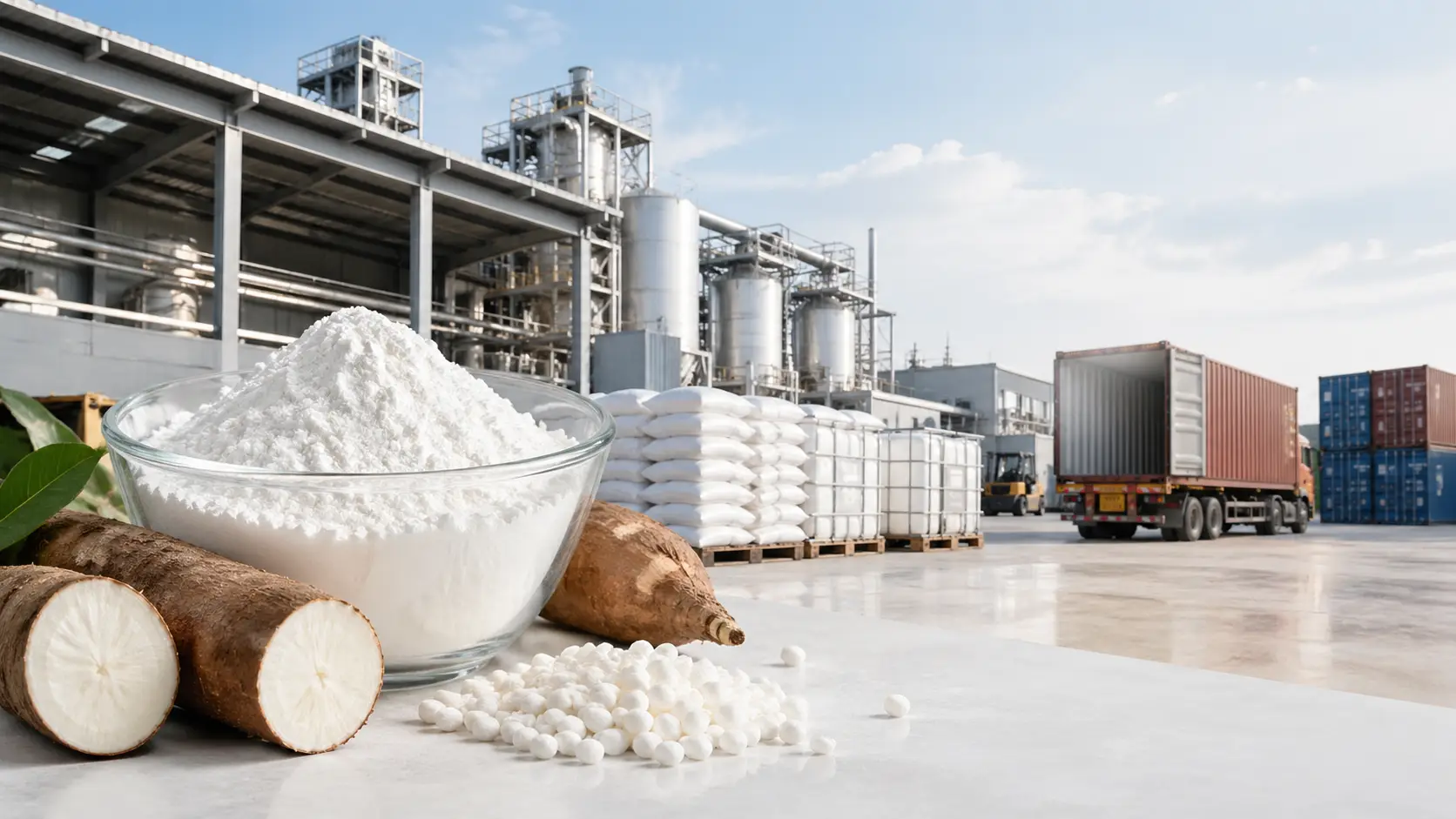
In the face of these disruptions, one product category stands out as a strategic solution: Modified Tapioca Starch. Unlike its native counterpart, modified tapioca starch is physically, enzymatically, or chemically treated to enhance its performance and stability. These modifications can create starches that are resistant to high heat, high shear, and acidic conditions—common challenges in industrial food processing. This enhanced functionality offers a critical advantage: it allows manufacturers to achieve the same or superior results using a lower overall inclusion rate, effectively reducing the cost impact of raw material price volatility.
For instance, a cross-linked Modified Tapioca Starch can provide a stable, creamy texture in a canned soup that would break down if native starch were used. This specific product, which can be sourced from reliable suppliers listed on foodadditivesasia.com, offers consistent viscosity even after retort processing. Key specifications to look for include a high Brabender viscosity, a low gelatinization temperature, and a high degree of freeze-thaw stability. By using a modified variant, a manufacturer can lock in a specific functional performance, reducing the risk of reformulation if the quality of the native starch supply fluctuates. This makes the product not just an ingredient, but a tool for supply chain risk management.
Furthermore, the use of Modified Tapioca Starch aligns with the growing trend toward clean-label innovation. Modern modification techniques, such as physical treatments (heat-moisture treatment) or enzymatic processes, allow for the creation of "clean label" modified starches that can be labeled simply as "tapioca starch" in some jurisdictions, or under a more consumer-friendly name. This provides a powerful dual benefit: the operational reliability of a high-performance ingredient and the marketing appeal of a simple, recognizable label. For US food companies looking to navigate supply chain disruption without alienating health-conscious consumers, this product category is an invaluable asset.
The Role of Alternative Sourcing and Strategic Partnerships
Mitigating the risk of supply chain disruption requires more than just changing a product specification; it demands a fundamental shift in sourcing strategy. The era of relying on a single, low-cost supplier is over. The most resilient US importers are now building diversified portfolios that include suppliers from multiple countries, such as Thailand, Vietnam, Indonesia, and even emerging producers in South America. This geographic diversification acts as a buffer against regional climate events or political instability.
Strategic partnerships with established global platforms, such as foodadditivesasia.com, are becoming indispensable. These platforms provide access to a vetted network of manufacturers, offering transparency into production capacity, quality certifications (like FSSC 22000 or ISO 22000), and real-time inventory levels. They also facilitate the sourcing of specialized products, from native starch for bakery applications to highly specialized Modified Tapioca Starch for dairy alternatives. By leveraging such partnerships, US procurement teams can move from a reactive, price-driven purchasing model to a proactive, value-driven approach that prioritizes supply security and quality consistency over the lowest spot price.
Conclusion
The market trends disrupting the tapioca starch supply chain—climate volatility, geopolitical shifts, and rising costs—are powerful and persistent. However, they are not insurmountable. By understanding these forces and adopting a strategic approach to sourcing, US food manufacturers can not only survive this period of instability but emerge stronger. The key lies in diversification, the adoption of high-performance ingredients like Modified Tapioca Starch, and the cultivation of deep, transparent relationships with global suppliers. Platforms like foodadditivesasia.com are at the forefront of this new paradigm, offering the tools and connections necessary to build a truly resilient supply chain for the future.
Disclaimer: This article is provided for informational and market insight purposes only and does not constitute professional, technical, or safety advice. The market trends and data discussed are based on publicly available information and industry analysis as of the date of writing, and should not be taken as a guarantee of future market behavior. Readers are strongly advised to independently verify all information with qualified experts, consult official product documentation such as Material Safety Data Sheets (MSDS) or Safety Data Sheets (SDS) for specific handling and application guidelines, or contact our team at foodadditivesasia.com for detailed product specifications and application support tailored to their unique manufacturing requirements.