Introduction: Vietnam Sugar Market at a Turning Point
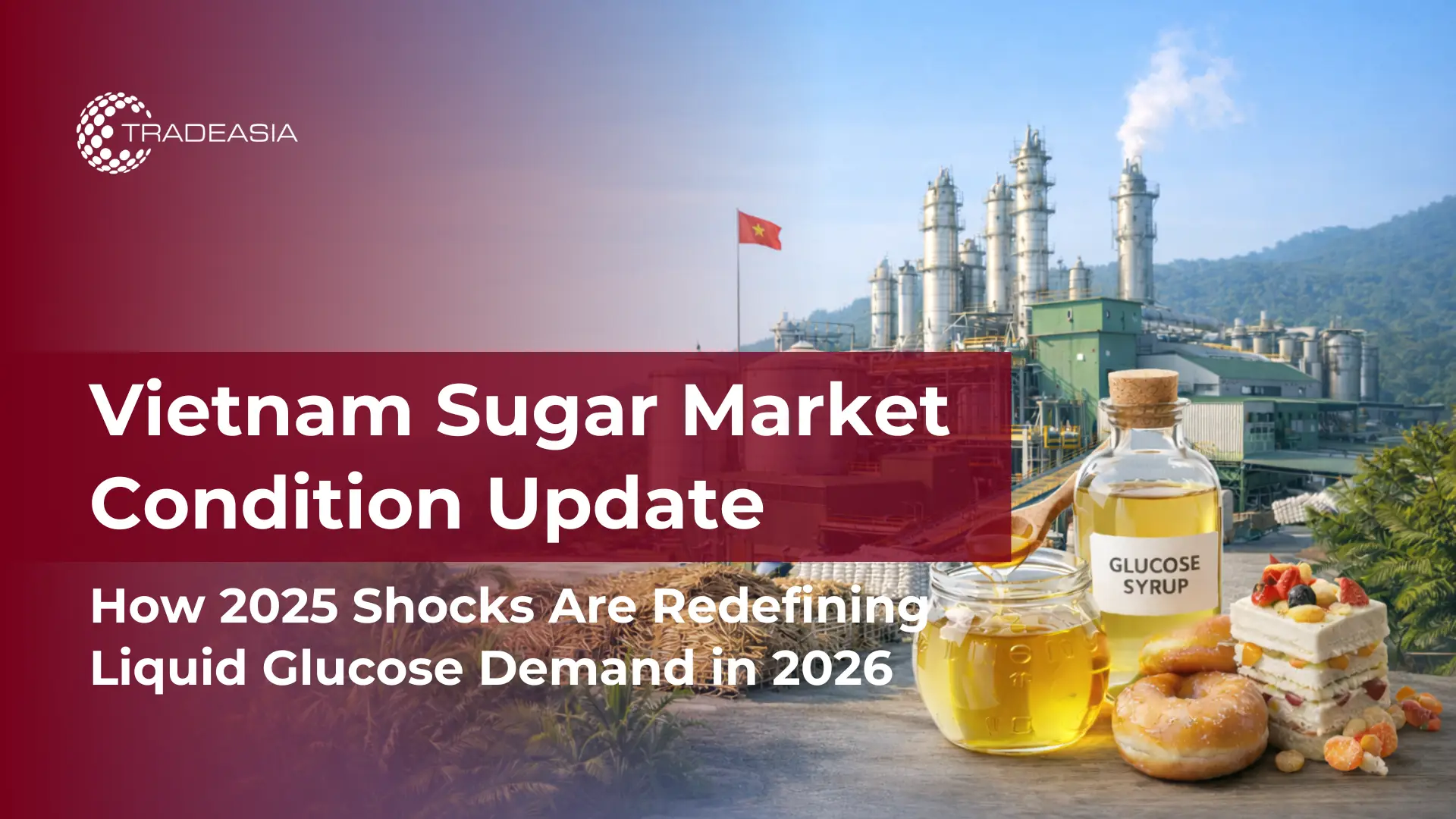
Vietnam’s sugar industry entered 2026 under sustained pressure following a series of supply-side disruptions that began in late 2025. Weather volatility, rising production costs, and tightening import controls combined to destabilize domestic sugar availability, creating ripple effects across food and beverage manufacturing sectors.
According to market coverage from regional agri-commodity analysts, refined sugar output in Vietnam struggled to recover after October 2025 due to delayed harvest cycles and constrained milling capacity. These structural weaknesses exposed long-standing inefficiencies in the country’s sugar value chain.
Regional Sweetener Substitution Trends
As manufacturers searched for cost-stable alternatives, demand for starch-based sweeteners intensified across Southeast Asia. Liquid glucose, in particular, gained attention as processors sought flexible formulations and predictable supply chains, especially from established suppliers in India such as liquid glucose used in industrial food processing in India.
Industry analysis published by international food ingredient journals highlights that substitution toward liquid glucose is not purely price-driven, but also linked to functional performance in confectionery, bakery, and beverage applications.
October 2025 Market Shocks and Structural Weaknesses
The market shock experienced in October 2025 was not an isolated event but a culmination of regulatory, environmental, and logistical stress factors. Domestic sugar producers faced rising input costs while import channels remained sensitive to policy intervention, limiting short-term corrective mechanisms.
Industry data reported by regional agricultural economics publications shows that Vietnam’s sugar self-sufficiency ratio declined, forcing downstream manufacturers to reassess long-term sourcing strategies. This reassessment extended beyond sugar to include alternative caloric sweeteners.
Policy and Production Constraints
Trade-focused reports indicate that import quota adjustments and safeguard duties added uncertainty for refiners and buyers alike. These policies amplified volatility across the sweetener market and accelerated procurement diversification, including sourcing liquid glucose grades from China such as liquid glucose 85% supply from China.
Based on regional market intelligence studies, buyers increasingly prioritize supply reliability over marginal price differences, reshaping procurement behavior throughout 2026.
Shifting Demand Toward Liquid Glucose Alternatives
The prolonged instability of Vietnam’s sugar sector directly contributed to rising liquid glucose demand across food manufacturing hubs. Liquid glucose offers consistent sweetness, controlled viscosity, and compatibility with automated production lines, making it attractive under volatile sugar conditions.
Academic research published in food science journals emphasizes that liquid glucose enables formulation stability even when sucrose prices fluctuate sharply. This technical advantage explains its growing share in confectionery and processed food output.
Functional and Commercial Drivers
Beyond functionality, procurement teams value the scalability of bulk liquid glucose supply. Manufacturers increasingly rely on structured procurement channels supported by documentation access through centralized platforms such as industrial specification downloads via a dedicated download center.
Market studies from global ingredient research firms confirm that this shift is structural rather than cyclical, aligning with long-term sweetener diversification strategies in Asia.
Supply Chain Constraints and Regional Trade Flow
Supply chain disruptions affecting sugar also highlighted the resilience gap between traditional and starch-based sweetener networks. Liquid glucose supply chains benefit from diversified feedstocks and regional processing hubs, reducing dependency on single-origin raw materials.
According to logistics and supply chain research published by international trade journals, starch sweetener flows across Asia are more adaptable to regional demand surges compared to plantation-based sugar supply.
Strategic Supplier Networks
Major producers continue to expand regional footprints, supported by vertically integrated operations such as the ADM starch sweetener business, which enhances supply continuity across Asia-Pacific markets.
Industry sourcing reports underline the importance of direct supplier engagement and structured communication channels, often initiated through professional B2B inquiry platforms like direct supplier contact services.
Price Volatility and Liquid Glucose Market Outlook 2026
Price volatility remains a defining feature of Vietnam’s sweetener market in 2026. Sugar prices reflect lingering supply tightness, while liquid glucose price trends show relative stability due to broader feedstock availability.
Market analysis published by Cognitive Market Research indicates that the Asia-Pacific liquid glucose market is expected to maintain growth momentum through 2026, supported by resilient industrial demand and diversified production bases, as outlined in the Asia-Pacific glucose syrup market report.
Investment and Innovation Signals
Long-term projections also factor in innovation within the sweetener sector, including patent-driven developments such as the allulose syrup patent Tate & Lyle, which signals continued investment in alternative sweeteners beyond conventional glucose.
Industry outlook publications suggest that these innovations will further insulate starch-based sweeteners from sugar market shocks over the coming quarters.
Conclusion: Strategic Implications for B2B Buyers
The sustained pressure on Vietnam’s sugar industry demonstrates how localized shocks can reshape regional ingredient markets well beyond their point of origin. For B2B buyers, understanding these dynamics is critical to managing risk and maintaining production continuity.
Resources such as liquid glucose sourcing in India and liquid glucose 85% supply from China illustrate how regional alternatives support procurement diversification. Meanwhile, access to technical documentation via centralized download centers and direct engagement through supplier contact platforms enhances operational readiness.
Finally, broader market intelligence from the Asia-Pacific glucose syrup market report reinforces the strategic importance of liquid glucose within Asia’s evolving sweetener landscape, positioning it as a long-term stabilizer amid ongoing sugar market volatility.