Introduction
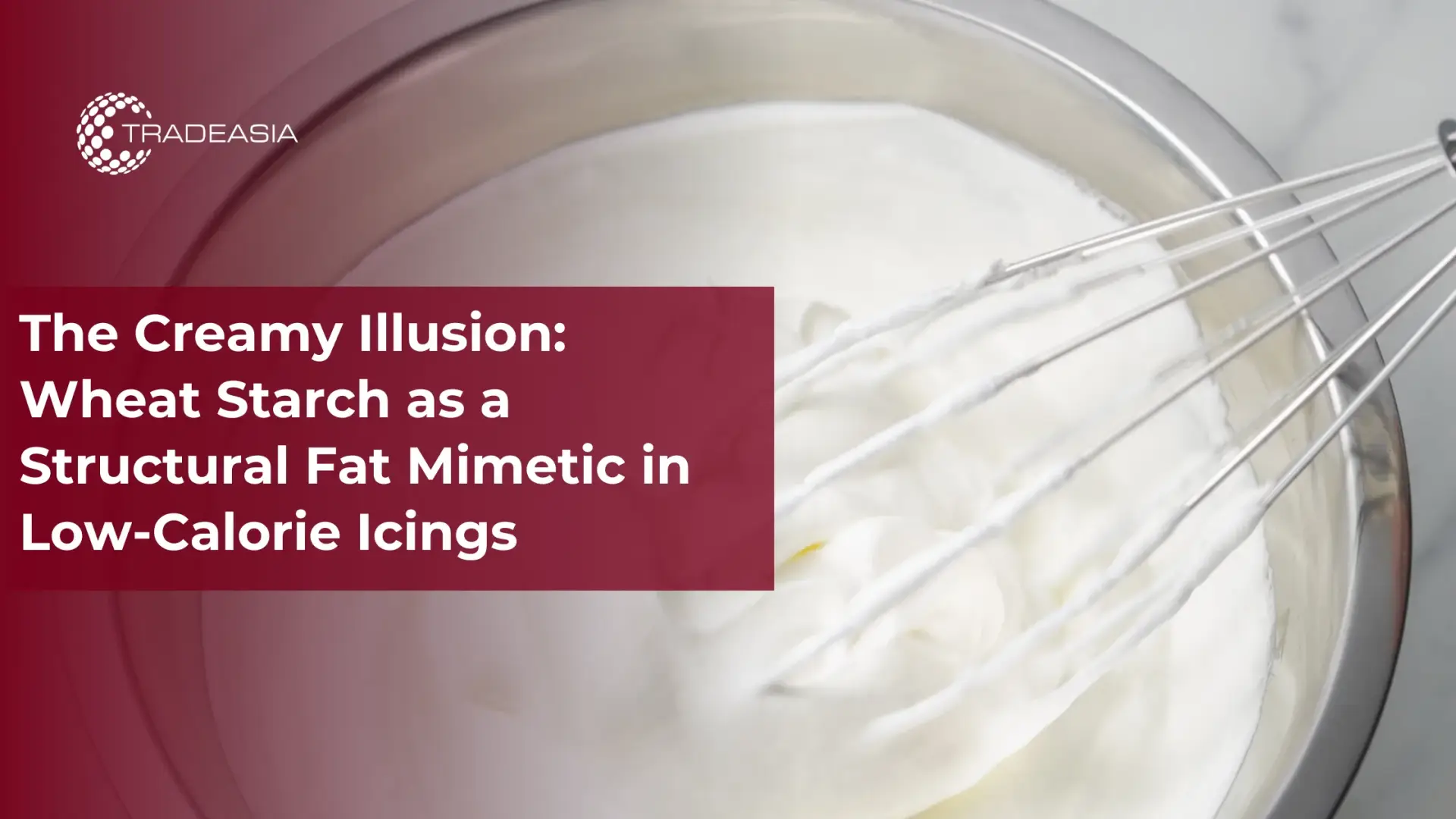
In the competitive landscape of bakery formulation, specifically within the realm of low-calorie icings, fillings, and whipped toppings, the reduction of fat creates an immediate and often disastrous sensory deficit. Fat—whether it be solid shortening, butter, or hydrogenated vegetable oil—is not merely a carrier of calories; it is the structural architect of the product. It performs a triad of critical functions in a traditional buttercream: it scatters light to create opacity, it lubricates the palate for a smooth mouthfeel, and it provides the rigid crystal network necessary to trap air bubbles.
When formulators attempt to reduce fat content to meet "Low Calorie," "Keto-Friendly," or "Plant-Based" label claims, the resulting product often suffers from significant quality degradation. Without the light-scattering crystals of fat, the icing becomes translucent and greyish, resembling a hair gel rather than a premium frosting. Without the lubricating properties of oil, the texture becomes fleeting and watery, vanishing too quickly in the mouth without the satisfying "cling" of buttercream. While hydrocolloids like xanthan or guar gum can restore viscosity, they often impart a slimy or stringy texture that consumers reject.
Amidst these challenges, Native and Modified Wheat Starch has emerged as the premier texturizer for these specific applications. Unlike standard corn, potato, or tapioca starches, wheat starch offers a unique "Bimodal" granule structure. This specific physical architecture mimics the tribology (lubrication behavior) of fat globules more accurately than any other cereal starch, allowing developers to successfully bridge the gap between "Diet" and "Decadent."
Mouthfeel: The Bimodal "Ball Bearing" Advantage
The primary mechanism by which wheat starch mimics the creaminess of fat lies in its distinct particle size distribution. Most commercial starches, such as corn starch, possess a relatively uniform, polyhedral granule size (roughly 15 microns). When hydrated, these uniform granules can stack together to form a paste that feels gritty or cohesive.
Wheat starch, however, is Bimodal. It contains two distinct populations of granules:
-
A-Granules: Large, lenticular (lens-shaped) discs ranging from 20 to 35 microns.
-
B-Granules: Very small, spherical granules ranging from 2 to 8 microns.
In a low-fat icing matrix, this distribution creates a unique rheological effect. The small, spherical B-granules function mechanically as microscopic "Ball Bearings." They fit into the interstitial spaces between the larger A-granules and the remaining sugar crystals. When the consumer manipulates the icing with their tongue (a process known as oral processing), these small granules roll over one another, significantly reducing friction between the larger particles.
This rolling action creates a lubricated, smooth sensation that closely replicates the rheology of emulsified fat droplets. This results in a "Pseudo-plastic" flow behavior—the icing flows easily under the shear stress of the tongue but holds its shape at rest. This prevents the icing from feeling gritty, chalky, or draggy—defects commonly associated with low-fat frostings thickened with granular silicates or microcrystalline cellulose. The result is a "short" texture that breaks cleanly in the mouth, mimicking the bite of real butter rather than the elasticity of a gummy starch paste.
Opacity: Restoring the "Whiteout" Effect
One of the most persistent visual challenges in removing fat is the loss of whiteness. Shortening crystals naturally scatter light, giving traditional buttercream its bright, matte-white appearance. When fat is replaced with water and clear-gelling hydrocolloids, the refractive index of the mixture changes. Light passes through the matrix rather than bouncing off it, causing the icing to appear translucent, glossy, and grayish. This visual cue immediately signals "artificial" or "low quality" to the consumer.
Wheat starch acts as a powerful opacifier. Its granules possess a refractive index that differs significantly from the water-sugar phase of the icing. When dispersed throughout the matrix, the swollen (but not fully solubilized) granules act as millions of microscopic mirrors, refracting and scattering light effectively.
This "whitening power" is significantly higher than that of waxy maize or tapioca starch, which tend to gelatinize into clear, cohesive pastes. By using granular (uncooked) or partially swollen wheat starch, manufacturers can achieve a "Full Fat" visual appearance in a product that may contain 50% less oil. This capability is vital for clean-label formulations, as it allows manufacturers to eliminate expensive or controversial whitening agents like Titanium Dioxide (TiO2) while maintaining the premium aesthetics of a vanilla wedding cake frosting.
Whip Stability and Overrun Integrity
For aerated products like non-dairy whipped toppings, chocolate mousse, or marshmallow cremes, structural integrity is paramount. In full-fat versions, the air bubbles are stabilized by a rigid network of agglomerated fat globules—a process known as partial coalescence. In low-fat versions, this fat network is absent, leading to rapid foam collapse, loss of volume, and liquid drainage.
Modified wheat starch addresses this by increasing the Interfacial Viscosity of the continuous phase. The starch polymers orient themselves at the air-water interface, forming a resilient, gel-like lamella (wall) around the air bubbles. This protective shell prevents the bubbles from coalescing (merging) or escaping.
This stabilization allows the topping to maintain high "Overrun" (air content)—often exceeding 200%—and retain sharp, defined peaks even after days of refrigerated storage. Furthermore, the wheat starch network effectively binds the free water released from the melting foam. This prevents the "weeping" of liquid at the bottom of the cake or dessert container, ensuring the decoration remains sharp and stable during the distribution cycle—a critical factor for frozen cakes sold in retail grocery chains where temperature fluctuations are common.
Freeze-Thaw Resilience: The Syneresis Shield
A major logistical hurdle for commercial icings is the freeze-thaw cycle. Most retail cakes are manufactured centrally, frozen at -18°C, shipped, and then thawed in the supermarket bakery case. Standard starches, particularly native corn starch, are prone to Retrogradation (recrystallization) during this process. As the starch chains re-align in the cold, they squeeze water out of the gel structure, causing the icing to separate, curdle, or weep water beads on the surface (syneresis).
Modified wheat starches, particularly those subjected to hydroxypropylation or acetylation, offer superior Freeze-Thaw Stability. The chemical modification places bulky groups on the starch chain, creating "steric interference." These bulky groups physically prevent the amylose polymers from snapping back together and crystallizing at freezing temperatures. This keeps the water chemically bound within the icing matrix. Consequently, a wheat-starch-based icing can withstand multiple temperature fluctuations without cracking or separating. This ensures that a cake thawed on a Monday remains visually pristine and texturally smooth until it is purchased on a Friday, significantly reducing food waste at the retail level.
Flavor Release: The "Clean" Palate
Finally, the choice of starch has a profound impact on the flavor profile of delicate icings. Corn starch, while cheap, often carries a distinct "cereal," "cardboard," or "pasty" aftertaste, especially at the high usage rates required for fat replacement. This background noise can mask delicate flavor notes like fresh strawberry, mild vanilla, or sweet cream, forcing formulators to over-flavor the product with synthetic aromatics to compensate.
Wheat starch is prized for its exceptionally Clean and Bland Flavor Profile. It contains lower levels of the specific lipids and proteins associated with cereal off-flavors compared to corn. Because it does not linger on the palate or leave a coating film, it allows for a rapid and authentic flavor release. The "meltaway" character of the wheat starch gel ensures that the sweetness and flavor peak immediately upon consumption and then clear the palate cleanly. This mimics the melting curve of real cocoa butter or dairy fat, allowing brands to use more subtle, natural flavorings and supporting a "premium" positioning even in a reduced-calorie formulation.
Conclusion
The use of wheat starch in low-calorie icings represents a triumph of structural engineering over caloric density. By leveraging the unique bimodal granule size for lubrication, the refractive properties for opacity, and the interfacial strength for aeration, food scientists can dismantle the long-held assumption that "low fat" must equal "low quality."
Wheat starch allows for the creation of indulgent, guilt-free treats that satisfy the visual and tactile demands of the modern consumer. It transforms a dietary compromise into a sensory experience that rivals the full-fat original. As the market continues to demand healthier indulgences, the unique rheological properties of wheat starch will remain the secret weapon in the formulator's toolkit.
Bridge the Gap Between Diet and Decadent
At Food Additives Asia, we understand that texture is the defining factor in consumer acceptance of low-calorie products. Whether you are formulating a keto-friendly frosting, a non-dairy whipped topping, or a shelf-stable fruit filling, our portfolio of Native and Modified Wheat Starches provides the structural mimicry you need.
Achieve the perfect mouthfeel without the fat.
We invite you to explore our technical specifications and discover how our wheat starch solutions can enhance your product's creaminess, opacity, and stability. Visit our website to view our catalog and submit your commercial inquiry today. Our technical team is ready to help you engineer the perfect bite.
Explore Our Wheat Starch Solutions & Inquire at foodadditivesasia.com