
Sodium Perborate Tetrahydrate (Industrial Grade) - China CAS: 10486-00-7
Sodium Perborate Tetrahydrate (Industrial Grade) - China CAS: 10486-00-7

The EIA's July outlook was built around assumptions that changed within weeks after the ceasefire collapsed. Chemical procurement and compliance teams should adopt scenario-based planning to strengthen supply chain resilience in an increasingly unpredictable market.

This weekly brief highlights Gulf logistics recovery, structural helium constraints, rising GLP‑1 solvent demand, shifting polymer duties in India, and imminent EU regulatory updates. Procurement teams must adjust sourcing strategies to navigate these evolving risks and opportunities.

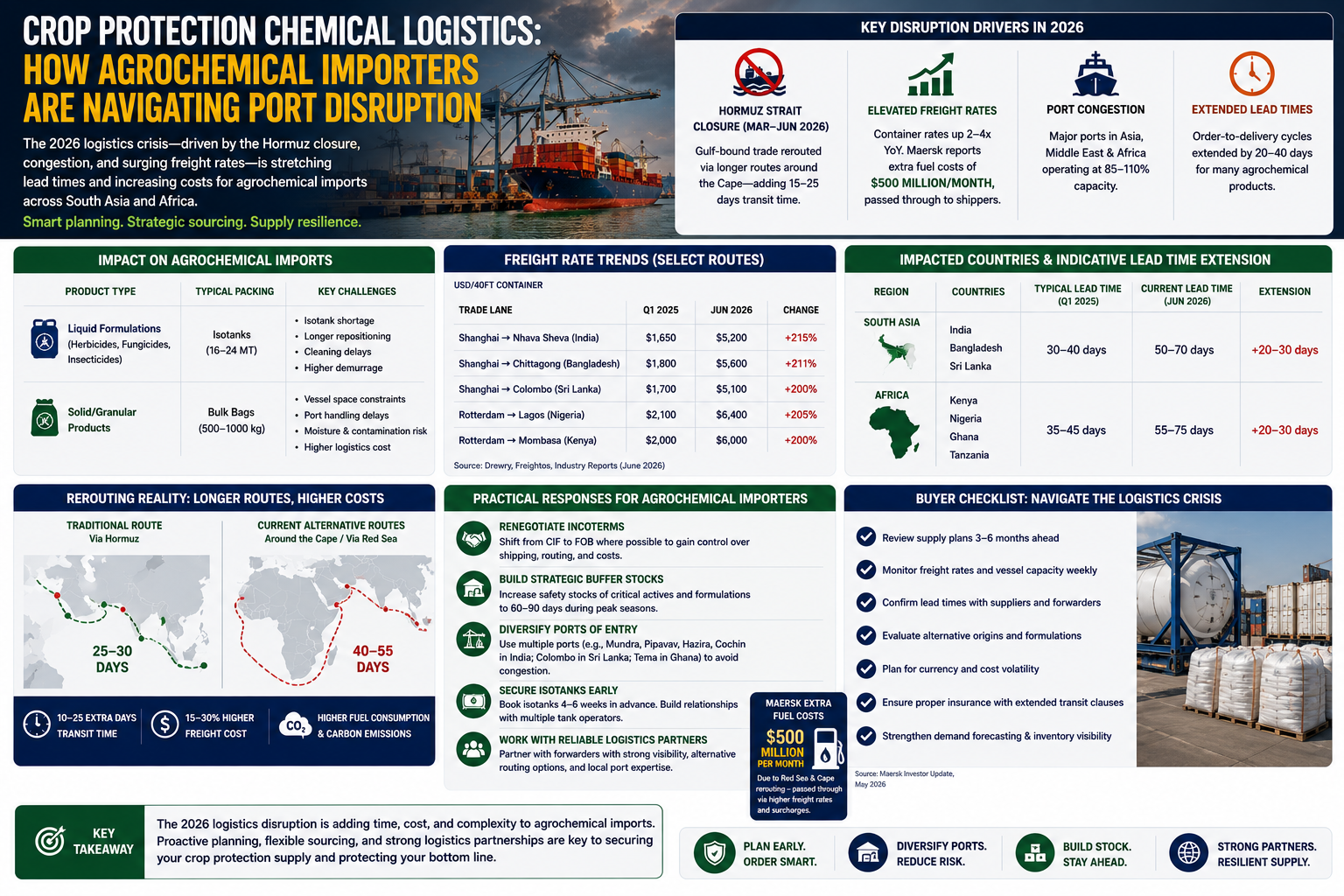
Despite improving Gulf exports and lower crude prices, recent attacks on Ever Lovely and Kiku confirm Hormuz remains high-risk for chemical cargo. For Q3 2026, Cape of Good Hope routing remains the safest and most commercially viable default option for most chemical shipments.

Rising war-risk insurance costs and P&I withdrawals are reshaping chemical shipping strategies and procurement decisions.
As global shipping routes begin normalizing after the Hormuz disruption, the Panama Canal is experiencing renewed congestion. Chemical shippers should prepare for extended transit times and scheduling uncertainty through Q3 2026.

The Hormuz ceasefire agreement reduced immediate disruption risks, but unresolved transit fee negotiations may create a new layer of uncertainty for chemical shippers planning H2 2026 cargo movements.
We're committed to your privacy. Tradeasia uses the information you provide to us to contact you about our relevant content, products, and services. For more information, check out our privacy policy.